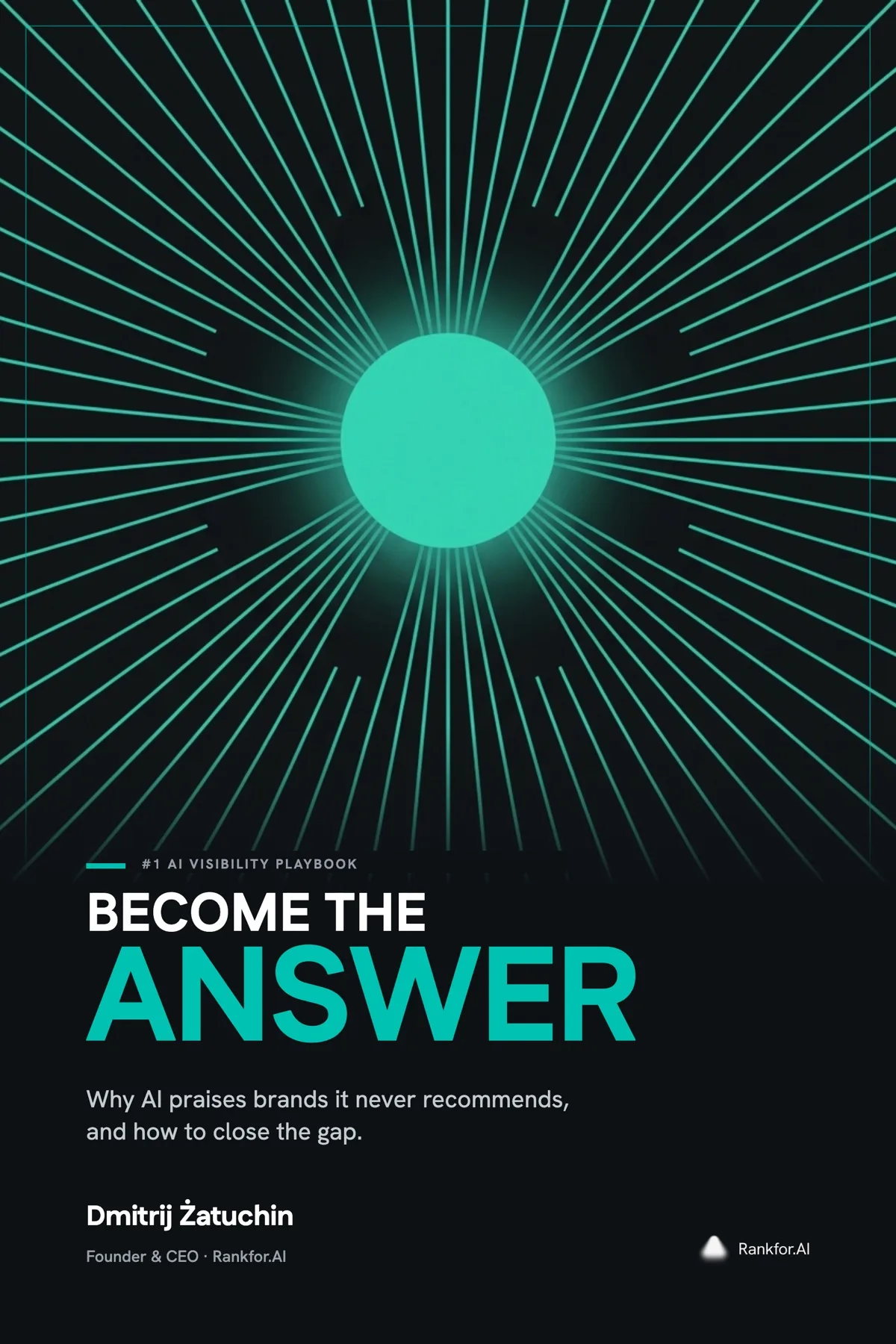
Become the Answer
How brands become visible, credible, and chosen inside AI answers.
A buyer asks an AI assistant which company to choose. It names four brands. If yours isn't one of them, there is nothing to report: no query, no ranking, no session, and no lost opportunity you can see.
Ranking is the wrong frame. AI visibility is a measurement problem, a reputation problem and, in the end, a choice problem.
Become the Answer shows you how to measure all three.
- 68% US Google searches now end with no click
- 58% position-one clicks when an AI Overview appears
- 85.7% AI citations point to websites you do not own
Part of the #BeVisible movement
Get the Book
Your dashboard measures
the wrong game
Rankings look stable, impressions look healthy, and the buyer already built a shortlist inside an AI answer you never saw. Four numbers say why.
Find out where your brand stands
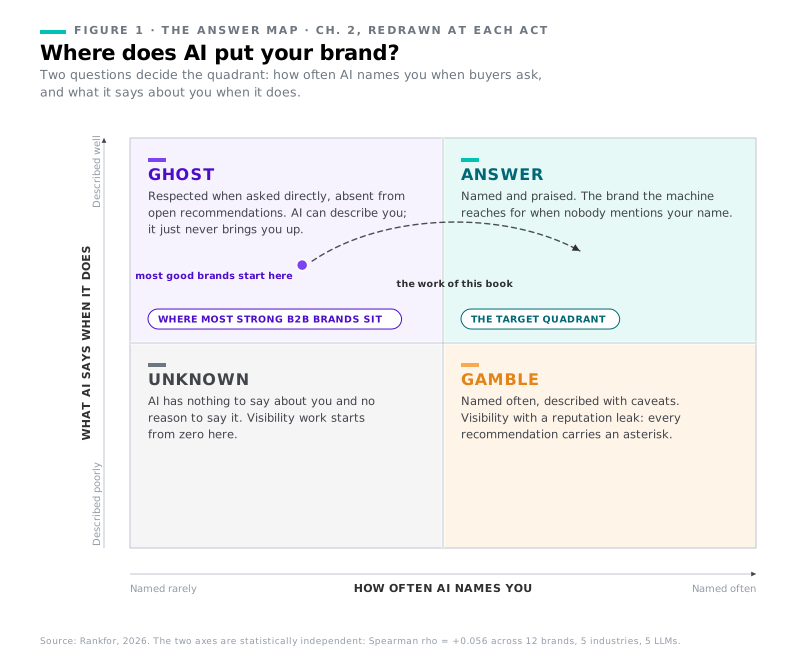
What AI says about your brand and whether AI names you are two different games. You place your brand on the Answer Map, by how often it gets named and how well it gets described, and read your real position instead of guessing.
- Answer: named often, described well. The place you want to be.
- Ghost: described well, named rarely. Where most strong B2B brands sit today.
- Gamble and Unknown: the two ways a good reputation still loses the deal.
See how AI actually picks a brand
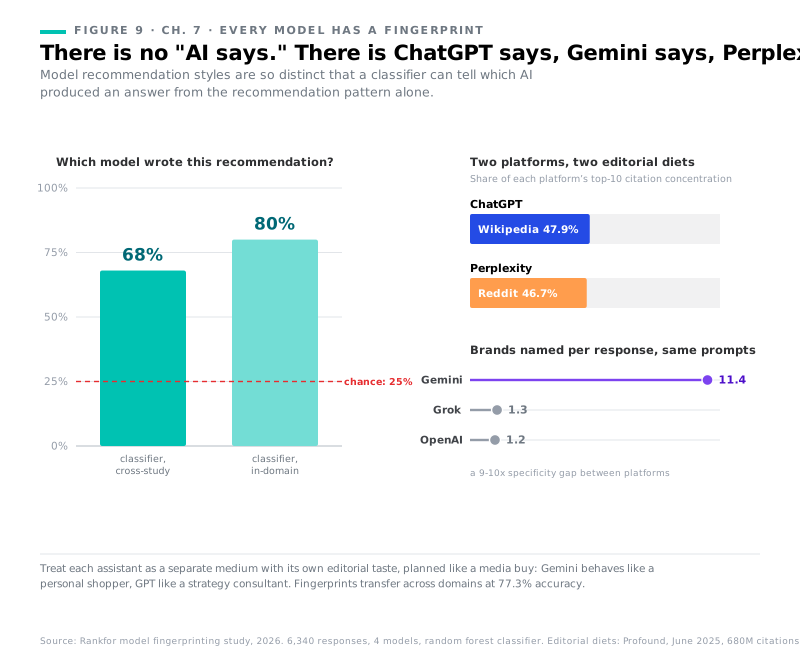
Before you spend a euro, see how the machine works. Most of what AI knows about your brand comes from places you do not control, and each assistant reads a different list, so the same brand can be a star on one and a ghost on the next.
- 87% of AI citations point to websites you do not own.
- Four models agree on the top brand in a category only 41.6% of the time.
- Bias never bans your brand. It just never brings it up, and it shifts by season and language.
Run the loop that compounds
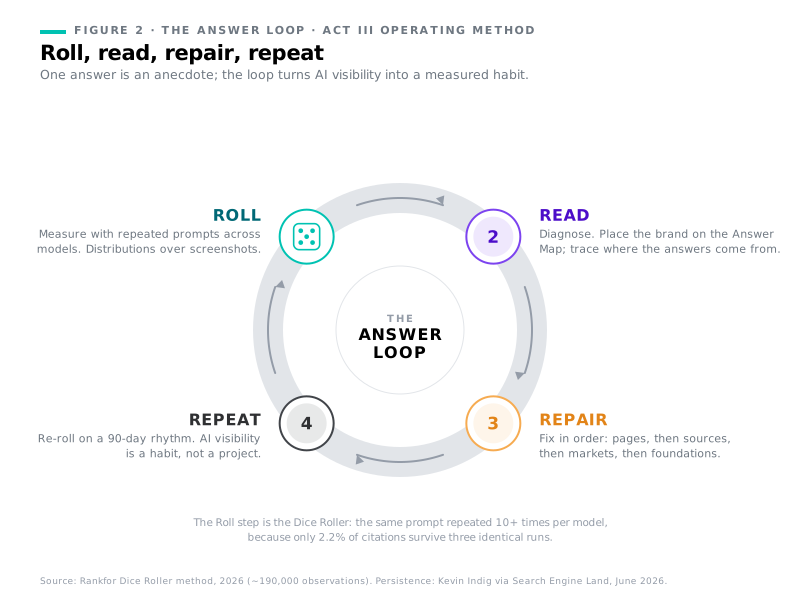
The operating method runs in four steps and repeats on a calendar:
- Roll: measure with repeated prompts across models, distributions over screenshots.
- Read: place the brand on the Answer Map and trace where the answers come from.
- Repair: fix in order, pages, then sources, then markets, then foundations.
- Repeat: re-run every ninety days, because the answers keep moving.
Every chart is a measurement you can rerun
Roughly 190,000 parsed AI answers, 270+ brands across five models and twelve languages. Each figure carries its source, its sample size, and its date, so anyone with a browser can check it.
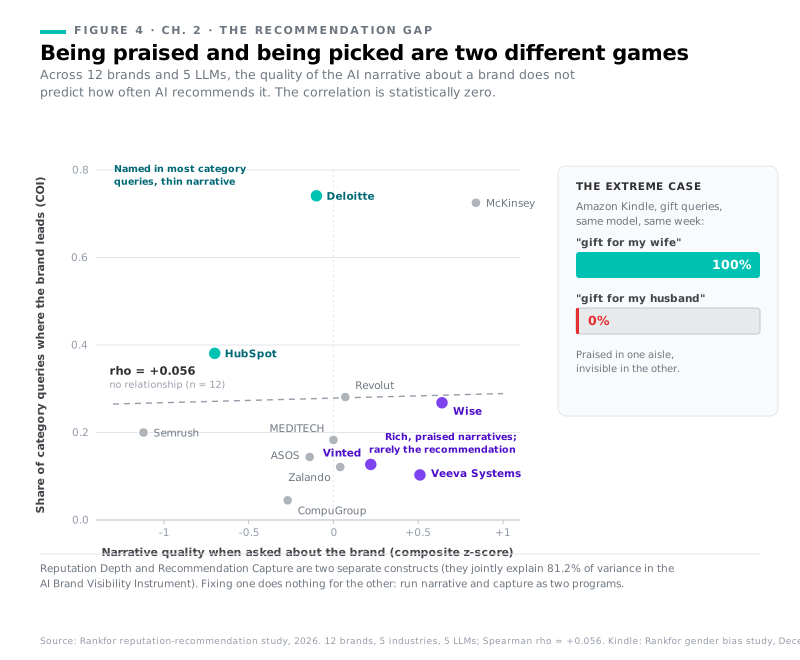
The Recommendation Gap. Praise and pick are statistically unrelated, +0.056 across 12 brands.
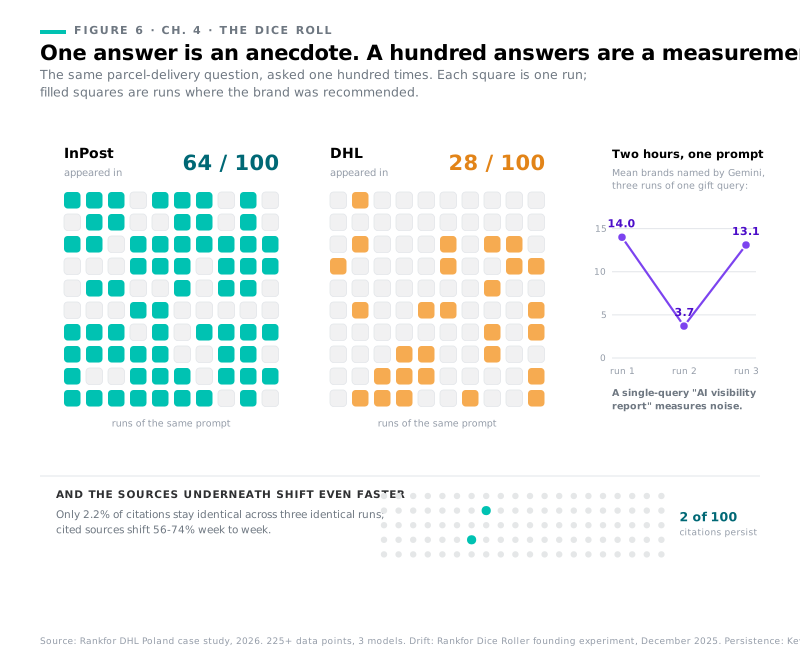
The Dice Roll. Only 2.2% of citations survive three identical runs, so one screenshot proves nothing.
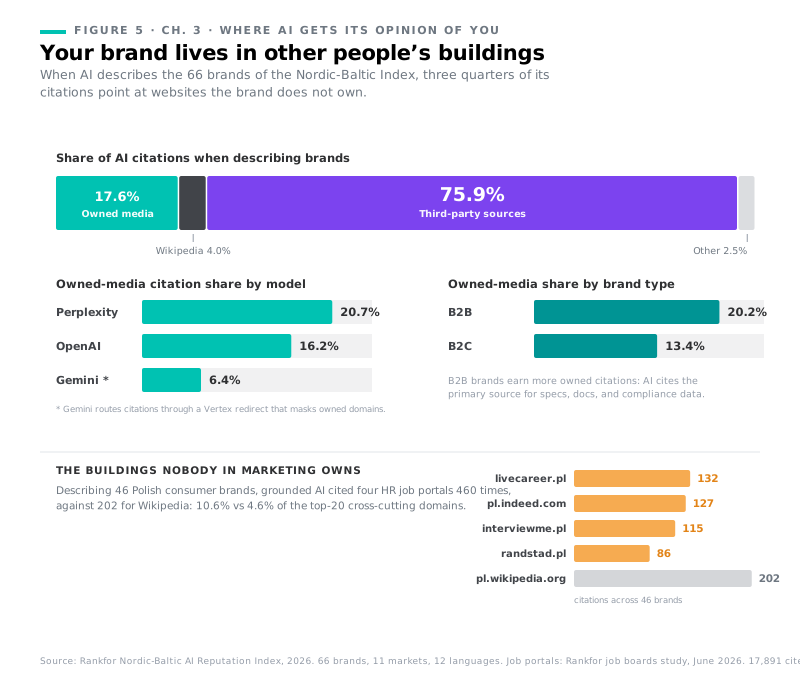
Where AI learns your brand. Of the evidence you can trace, you control about one source in seven.
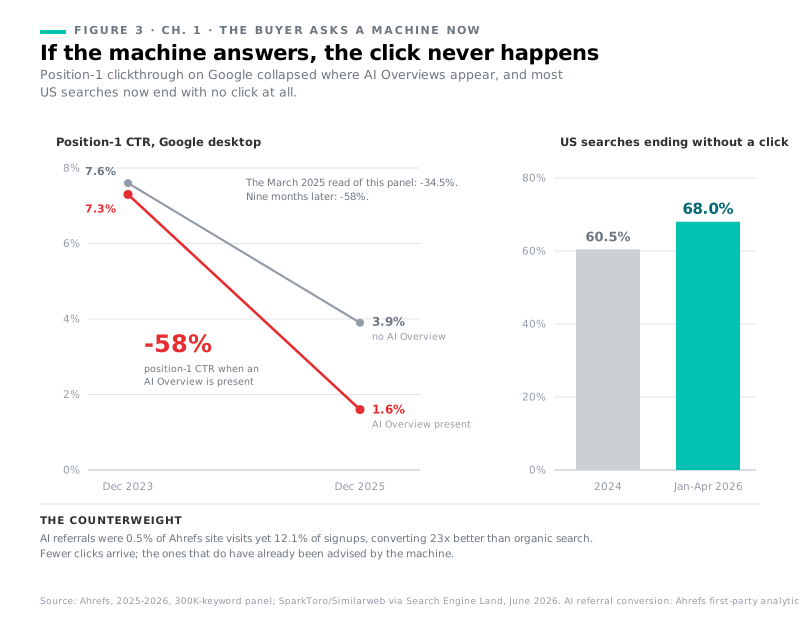
The click collapse. A first-position page under an AI Overview lost most of its clicks in two years.
Tested live with hundreds of CMOs
The data and frameworks inside the book aren’t theoretical. We’ve run these ninety-day loops live in Warsaw, Tallinn, Helsinki, Riga, London, and Stockholm with leading B2B brand teams. Watch the workshops and briefs below.
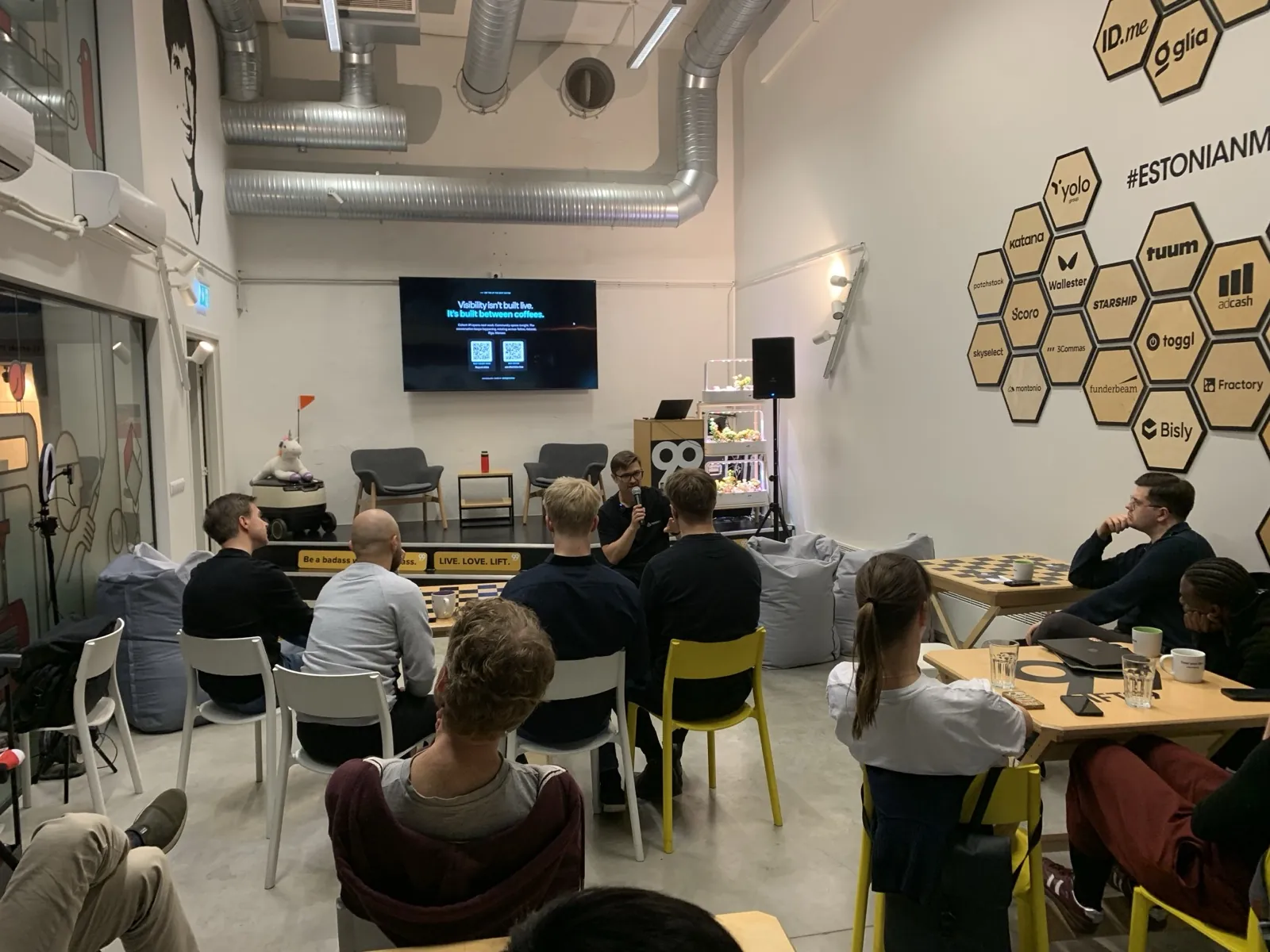
CMO Briefing: Baltic marketing leaders analyzing their AI visibility map in Tallinn.
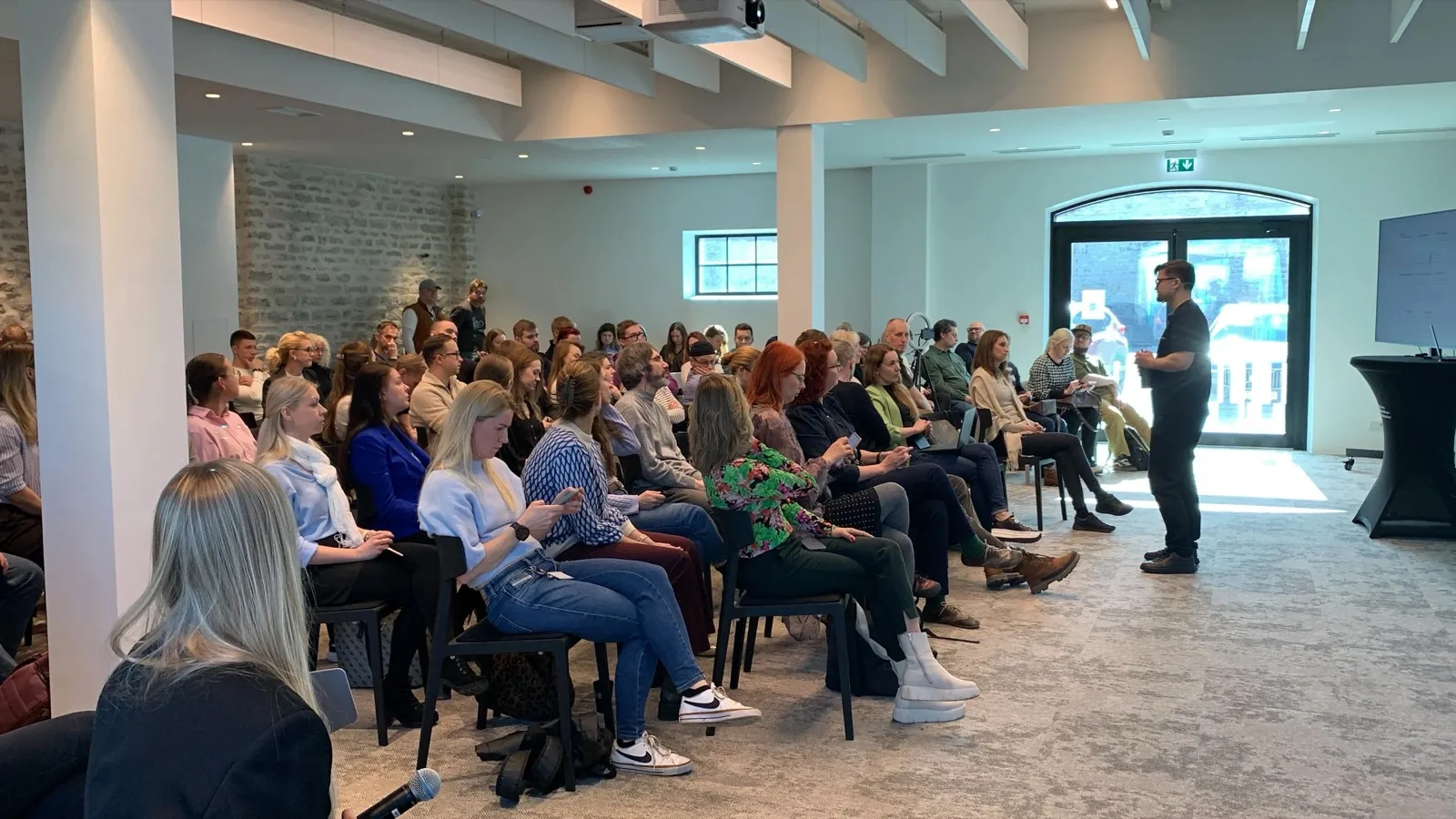
The #BeVisible Panel: Discussing the Bilingual Penalty on Baltic brand recommendations.
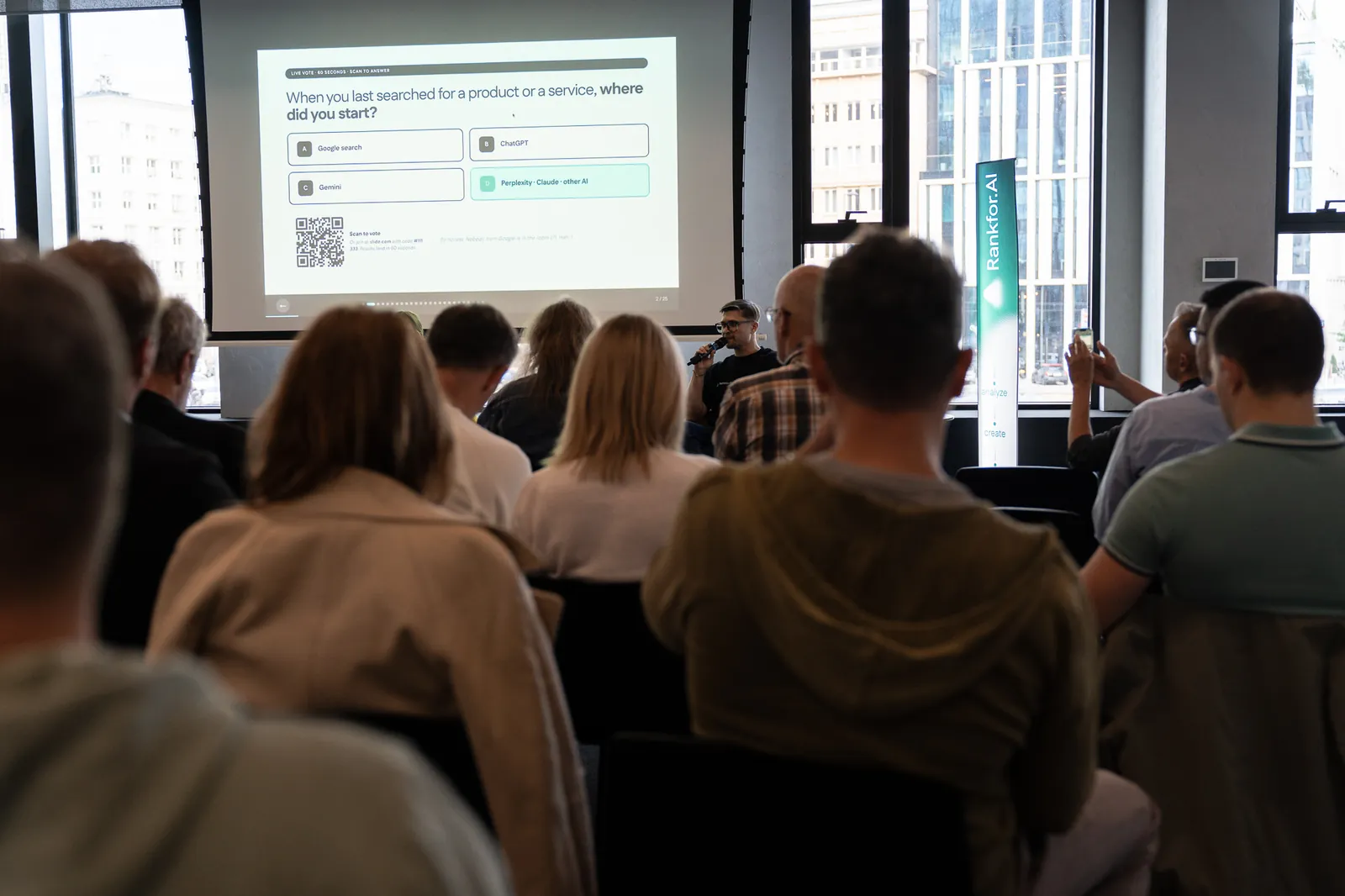
Warsaw Session: Practical exercises running the ninety-day Answer Loop with Polish enterprise teams.
Fourteen chapters, fourteen laws
Three acts. The Gap names the problem, the Machinery explains how AI picks a brand, and the Answer Loop is the method you run. Each chapter closes with one law you can act on. Chapters 1-3 are the free sample, 4-6 unlock when you buy, and the rest ship with the book.
Act I · The Gap
Act II · The Machinery
Act III · The Answer Loop
Appendices
- AEvidence RegisterEvery study, vendor, and dataset in the book, fully cited and dated.
- BJargon TranslatorFifty AI-visibility terms in plain English, from Presence Share to llms.txt.
- CTemplatesFifteen worksheets, checklists, and scorecards to run the work in-house or brief a vendor. Each drops with a worked example during the LinkedIn launch series.
- DMethodology NoteSample sizes, peer-review status, and the limits of each study, stated plainly.
Written for the people who own the number
CMOs and marketing leaders
You own the pipeline number. See whether AI is quietly redrawing your shortlist while the dashboard looks fine.
Demand generation and growth
Organic is flattening and you suspect AI. Get a diagnostic with sample sizes instead of a hunch.
Brand and PR
Most of what AI says about you was written on websites you do not own. Learn which ones, and how to earn them.
Agencies and consultants
Bring clients a measured AI-visibility plan, with numbers that survive a board meeting.








The numbers come first, then the playbook
Between December 2025 and June 2026, Dmitrij and the Rankfor research team collected and parsed roughly 190,000 AI answers covering more than 270 brands in twelve languages, across five models. Thirty-eight published research articles report the findings as they land, and eleven journal manuscripts submit the strongest claims to peer review, with preprints on arXiv. Every claim in the book carries a source, a sample size, and a date.
Follow for insightsFAQ
What is Generative Engine Optimization (GEO)?
Generative Engine Optimization is the practice of making your brand visible inside AI answers, the responses from ChatGPT, Gemini, Perplexity, and Google AI Overviews. It measures how often AI names and cites you when a buyer asks a question, then improves the pages, sources, and signals that feed those answers.
How is this different from SEO?
SEO works to rank a page; GEO works to get your brand named in an answer. The book shows they are separate games: a page can hold position one in search and still appear in none of the AI answers your buyer reads. You measure AI visibility with repeated prompts, not rank trackers.
Who is this book for?
Marketing leaders who own a pipeline number: CMOs, demand generation and growth leads, brand and PR teams, and the agencies that serve them. It assumes no technical background and translates every term in a plain-English appendix.
Is the research real and reproducible?
Yes. Every claim carries a source, a sample size, and a date. Between December 2025 and June 2026 the Rankfor research team collected and parsed roughly 190,000 AI answers covering more than 270 brands in 12 languages, across five models. Thirty-eight published research articles report the findings, and eleven journal manuscripts submit the strongest claims to peer review, with preprints on arXiv. The appendix lists each method so you can rerun it in a spreadsheet.
Does the book cover markets beyond English?
Yes, per-language measurement is one of its central findings. The research spans 12 European languages, and 25 of the 66 brands in the Nordic-Baltic index tell a worse AI story in their home language than in English, a pattern the book names the Bilingual Penalty. Dedicated chapters cover measuring per language and repairing per market.
Where can I follow the ideas week by week?
Dmitrij publishes one law per week on LinkedIn through the launch season, fourteen laws in fourteen weeks, each with the data behind it. The templates from Appendix C drop alongside the series as worked examples. Read the first three chapters free on this page to start.
What is the Recommendation Gap?
It is the finding that what AI says about your brand and whether AI recommends your brand are statistically unrelated, +0.056 correlation across twelve brands. Being described well does not make you the named answer. The book shows why, and how to win the second game.
What formats is it available in?
You can read the first three chapters free as a PDF on this page. The full book comes in three editions: the e-book, available now, and the softcover and hardcover, both open for pre-order. An audiobook and a twenty-page executive summary for teams follow later.
Do I need to buy tools to use it?
No. The method runs on a spreadsheet and one patient afternoon, and the templates in the appendix walk you through it. If you would rather have the measurement done for you, Rankfor scores your brand’s AI visibility automatically.

Become the answer in AI chat
Start with the first three chapters, free. Then follow along: one law per week on LinkedIn, fourteen weeks, each with the data behind it.